
2.1 Assess the effectiveness of the healthcare system in Australia
EXPLORE THIS MODULE
RELATED RESOURCES

FREE: A Guide to Verb + Marks: EXPLAIN
Unpack ‘explain’ questions, it’s marking criteria and write stronger responses.

PDHPE to HMS Dashboard
Mapped practice questions, marking support and student activities.

A Guide to Verbs + Marks
Teach your students to understand exactly how to write their way into the top band for HMS
GET FREE HMS RESOURCES AND UPDATES
Receive new resources, examination support and teaching ideas straight to your inbox.
About the dot point
Australia’s healthcare system is the network of services, funding and organisations that work together to prevent illness, treat disease, support recovery, and improve population health. In Australia, this includes health promotion, disease prevention, early detection, diagnosis and treatment, rehabilitation, and palliative care, delivered through a mix of publicly funded services and a substantial private sector. The system matters because it shapes whether people can access essential care at the right time, without unfair barriers linked to cost, geography, or the safety and suitability of care for different communities.
How to approach it
This dot point uses the directive verb assess, which means you must make a reasoned judgement about how well Australia’s healthcare system works. To assess effectiveness, you need to judge the system’s value and outcomes using clear criteria such as health outcomes, equity of access, quality and safety, and timeliness, then support your judgement with specific evidence and examples.
1. The role of the healthcare system
1.1 What the healthcare system is designed to do

Australia’s healthcare system exists to protect, maintain, and improve the health of the population across the lifespan. Its role is broader than treating illness once it appears. An effective healthcare system also works to prevent disease, detect problems early, manage chronic conditions, restore function, and support people at the end of life.
At its best, the system supports people across all stages of care, from health promotion and prevention through to diagnosis and treatment, rehabilitation, and palliative care. This means the system should be judged not only by how well it responds to illness and injury, but also by how well it reduces avoidable disease, supports early intervention, and helps people maintain quality of life.
|
Main role |
What this involves |
Why it matters |
|---|---|---|
|
Health promotion and prevention |
Immunisation, screening, education, public health campaigns |
Reduces the burden of disease before treatment is needed |
|
Diagnosis and treatment |
Medical assessment, testing, medicines, procedures, hospital care |
Addresses illness and injury once they occur |
|
Ongoing management |
Monitoring and treating long-term conditions |
Prevents complications and supports functioning |
|
Rehabilitation and recovery |
Allied health, follow-up care, discharge support |
Helps people regain independence and reduce relapse |
|
Palliative and supportive care |
Symptom management and quality-of-life support |
Ensures care remains person-centred across the lifespan |
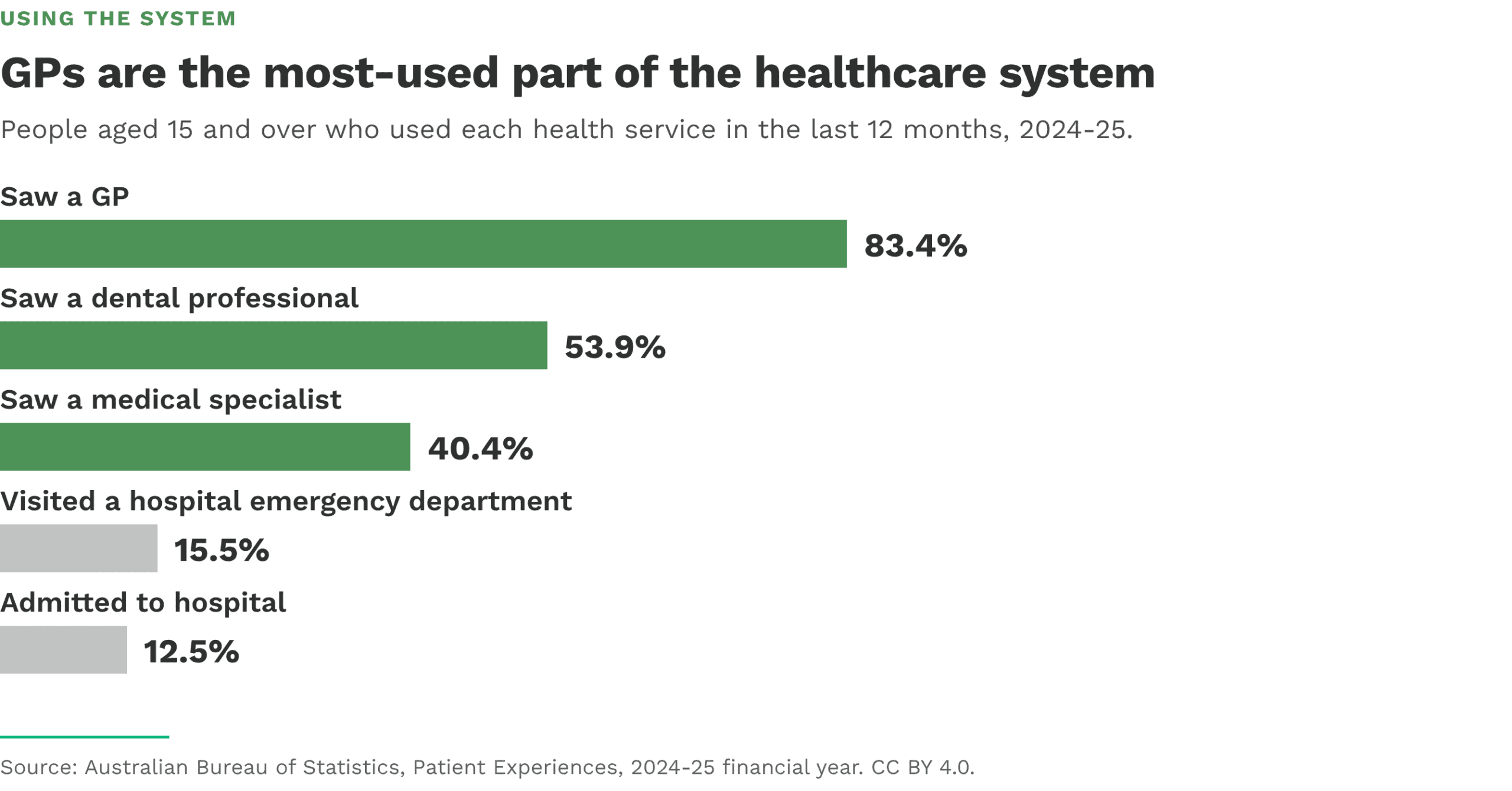
A central expectation of the Australian system is universal access. Through Medicare and publicly funded hospitals, care is intended to be based on health need, not simply on ability to pay. The Pharmaceutical Benefits Scheme (PBS) supports this role by making many essential medicines more affordable. These features are important when judging effectiveness because they show that the healthcare system is designed to improve health at a population level, not only provide treatment to those who can afford it.
1.2 How healthcare is delivered
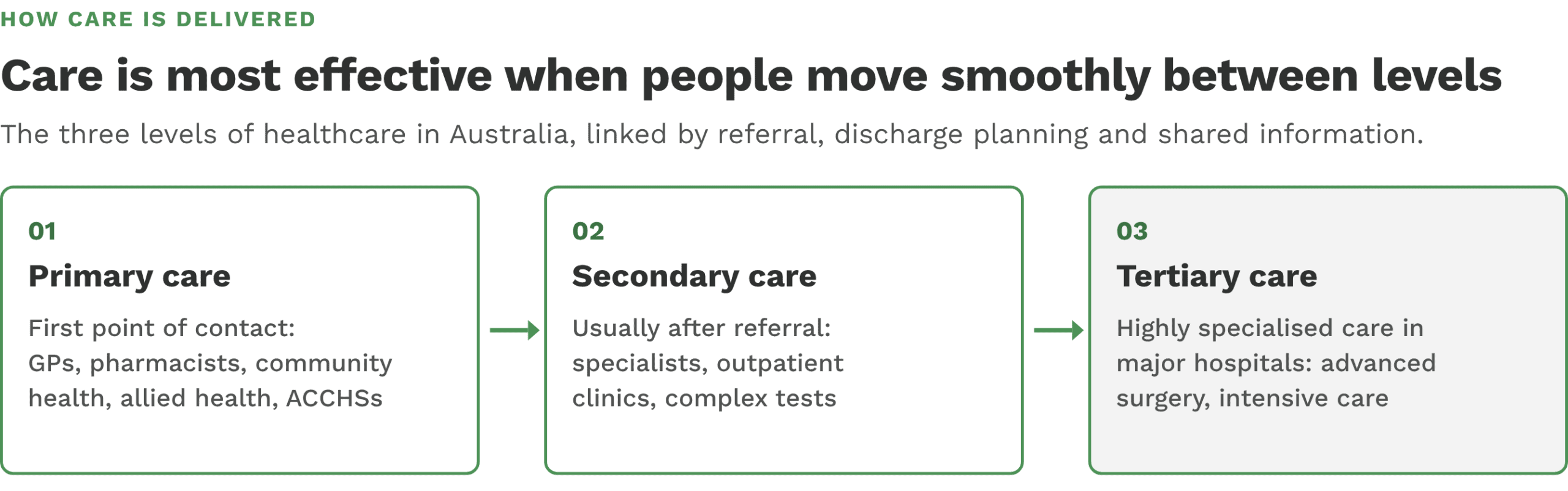
The healthcare system performs this role through different levels of care, which need to work together rather than operate in isolation.
Primary healthcare is the first point of contact for most people. It includes services such as GPs, pharmacists, community health services, allied health, and Aboriginal Community Controlled Health Services. Primary healthcare is especially important because it focuses on prevention, early detection, and ongoing management.
Secondary healthcare usually occurs after referral from primary care and includes more specialised assessment or treatment, such as specialist consultations, outpatient clinics, and more complex investigations.
Tertiary healthcare involves highly specialised services, usually provided in major hospitals, such as advanced surgery, intensive care, and specialised procedures.
This structure matters because the system is more effective when people can move smoothly between these levels. A person with asthma, diabetes, cancer, or a serious injury often needs care from more than one part of the system. If referral pathways, discharge planning, and information sharing are weak, continuity of care is reduced and outcomes are likely to worsen.
Example: A person visits their GP about ongoing chest pain, which is primary healthcare because the GP is the first point of contact. The GP refers them to a cardiologist for further testing, which is secondary healthcare, and if they then need heart surgery in a major hospital, this becomes tertiary healthcare. This shows that the healthcare system is most effective when people can move smoothly between levels of care and information is shared clearly between services.
1.3 Public and private care within the system
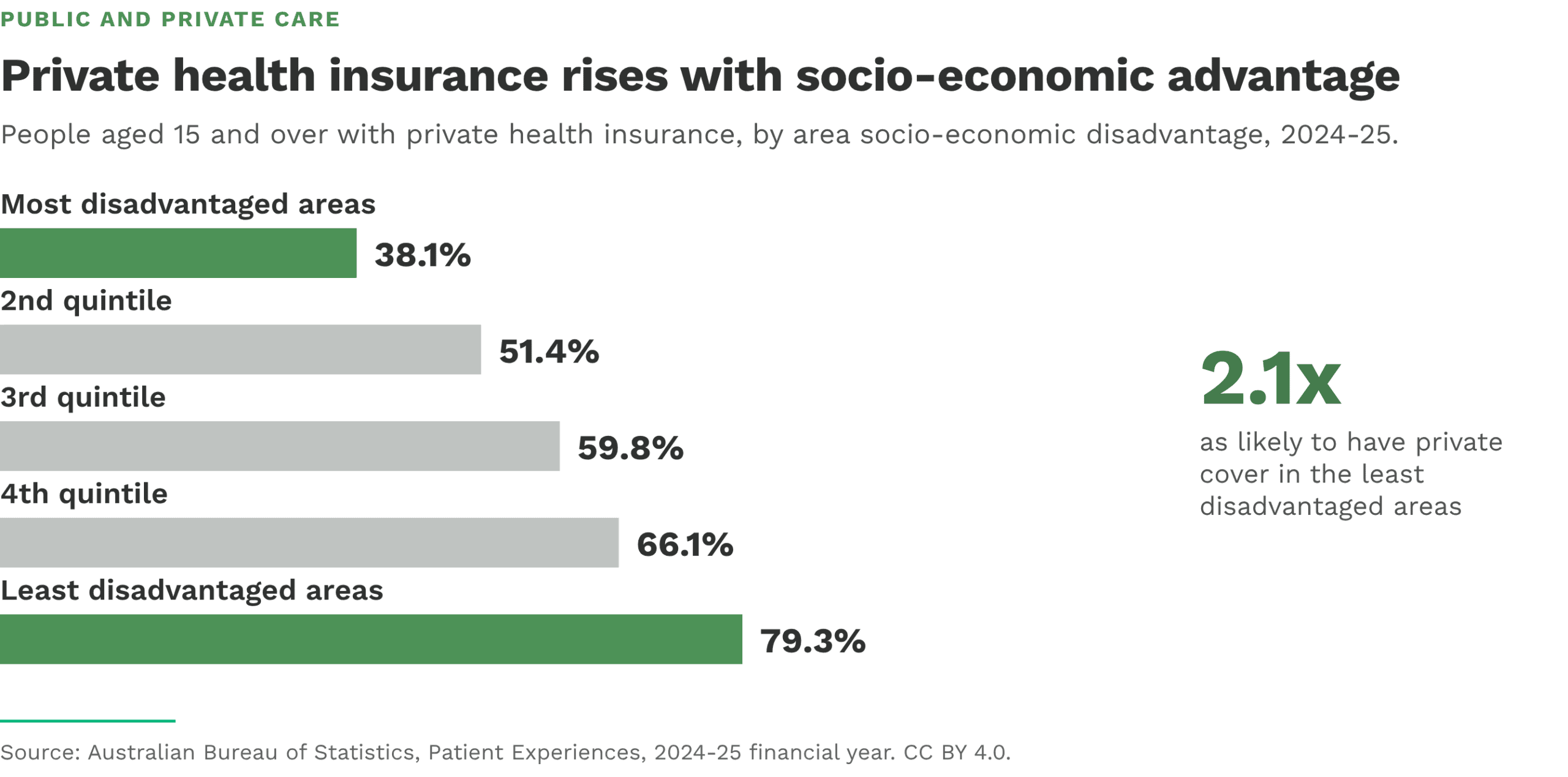
Australia has a hybrid healthcare system, which means care is provided through both the public sector and the private sector. This can improve effectiveness because it increases the overall range of services available, adds system capacity, and gives some people more choice. However, it can also create different experiences of care depending on a person’s financial situation.
The public sector includes public hospitals and many Medicare-funded services. It usually involves lower direct cost to the individual and plays an important role in supporting universal access and reducing financial barriers to care. The private sector includes private hospitals, private specialists, and many dental and allied health services. It often involves private health insurance or out-of-pocket payment. This part of the system can add capacity and choice, and can reduce waiting times for some people.
|
Public sector |
Includes public hospitals and many Medicare-funded services. Usually involves lower direct cost to the individual. |
Supports universal access and reduces financial barriers to care. |
|
Private sector |
Includes private hospitals, private specialists, and many dental and allied health services. Often involves private health insurance or out-of-pocket payment. |
Adds capacity and choice, and can reduce waiting times for some people. |
A related but separate issue is patient status. This refers to whether a person is treated as a public patient or a private patient. This affects cost, choice of doctor, and often waiting time. Patient status is not exactly the same as the type of hospital, because a person can sometimes be treated as a private patient in a public hospital.
A public patient is usually treated in a public hospital without direct hospital charges. In this pathway, the person is generally allocated a treating doctor or medical team rather than choosing their own practitioner. This improves affordability and supports equity of access, because care is available regardless of a person’s ability to pay. However, for some non-urgent procedures, public patients may experience longer waiting times.
A private patient may be treated in a private hospital, or as a private patient in a public hospital. In this pathway, the person may have greater choice over their doctor and may be able to access treatment more quickly. This can improve timeliness and choice, but it usually involves higher costs through private health insurance, out-of-pocket expenses, or both.
This shows why Australia’s healthcare system can be both effective and unequal at the same time. The public side of the system strengthens affordability and universal access, while the private side can improve speed, choice, and overall system capacity. However, when faster treatment or greater choice depends on a person’s financial resources, overall equity is reduced.
Example: A person needs a non-urgent knee operation and chooses to be treated as a public patient in a public hospital, which means the surgery is more affordable but may involve a longer wait. Another person with private health insurance chooses to be treated as a private patient, which may give them faster access and more choice of specialist, but usually costs more. This shows how Australia’s healthcare system can improve choice and capacity, while still creating differences in equity.
1.4 Coordination and continuity of care
An effective healthcare system does not only need a wide range of services. It also needs those services to work together over time. Continuity of care is especially important for chronic disease, disability, mental health, and ageing, where health outcomes depend on regular monitoring, early intervention, and coordinated support.
A key part of continuity is having a regular GP who can coordinate care across different services. Effective follow-up, clear referrals, good discharge planning, and systems such as My Health Record can all help reduce duplication, missed information, and delayed treatment. Multidisciplinary care is also important when a person has complex or long-term needs.
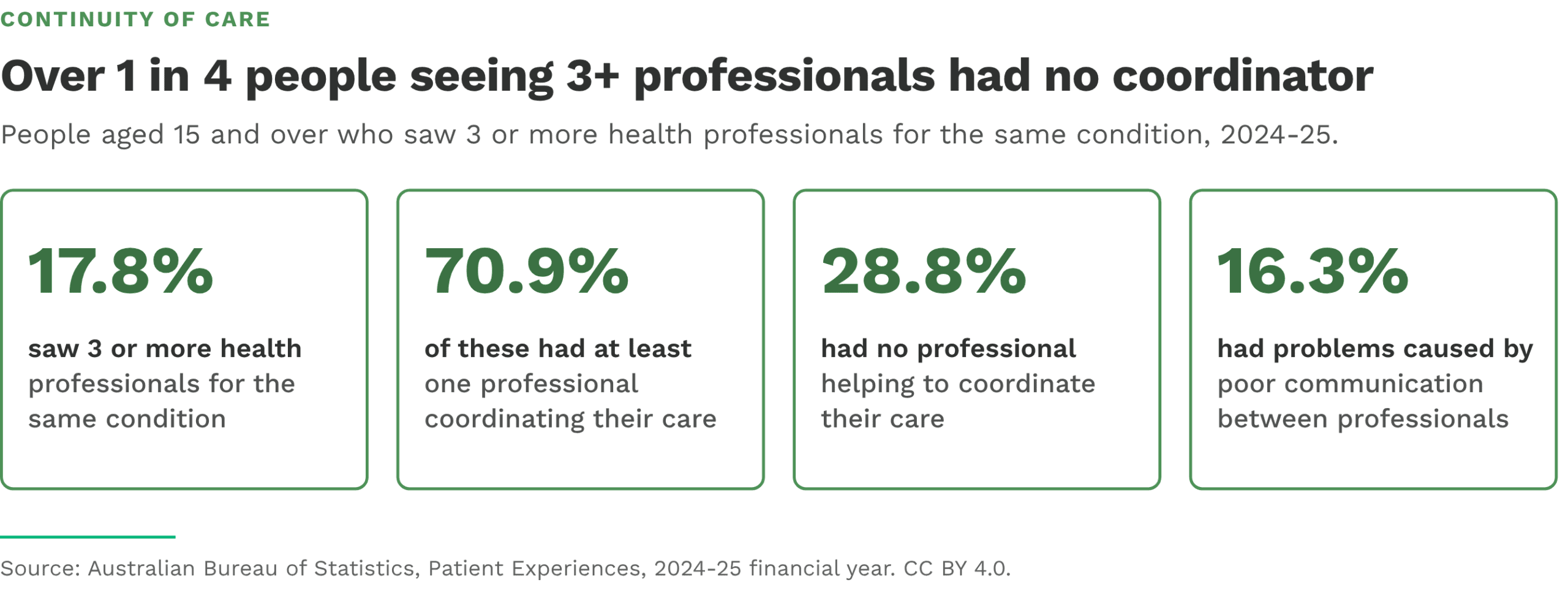
The detailed breakdown of which organisations and levels of government fund, deliver, and regulate these services is examined more fully in 2.2. In this chapter, the key point is that poor coordination reduces effectiveness because people may repeat their history, miss follow-up care, or fall through gaps between services.
Example: A person with type 2 diabetes sees their regular GP for routine monitoring, and the GP creates a care plan that includes referral to a dietitian and podiatrist. When the person is later admitted to hospital with a foot infection, the hospital sends discharge information back to the GP, who then organises follow-up appointments and medication review. Because each provider knows what the others have done, care is more consistent and the risk of complications is reduced. This shows that coordination and continuity of care occur when services share information, follow up clearly, and work together over time.
2. Equity of access to the healthcare system
2.1 What equity of access means
Equity of access means that people are able to receive healthcare according to their needs, with additional support provided where barriers are greater. This is different from equality, which would simply provide the same level of service to everyone regardless of circumstance.

A healthcare system cannot be considered fully effective if it works well mainly for people who can afford costs, live close to services, or already know how to navigate complex systems. Equity matters because without it, the people with the greatest health needs are often the least able to access timely and appropriate care.
What equity of access consists of
Access can be understood in three connected ways:
- Physical access: Services are available within reasonable distance, or through outreach and telehealth
- Financial access: Cost does not prevent or delay care
- Cultural and communication access: Care is understandable, respectful, culturally safe, and responsive to different needs
These dimensions often interact.
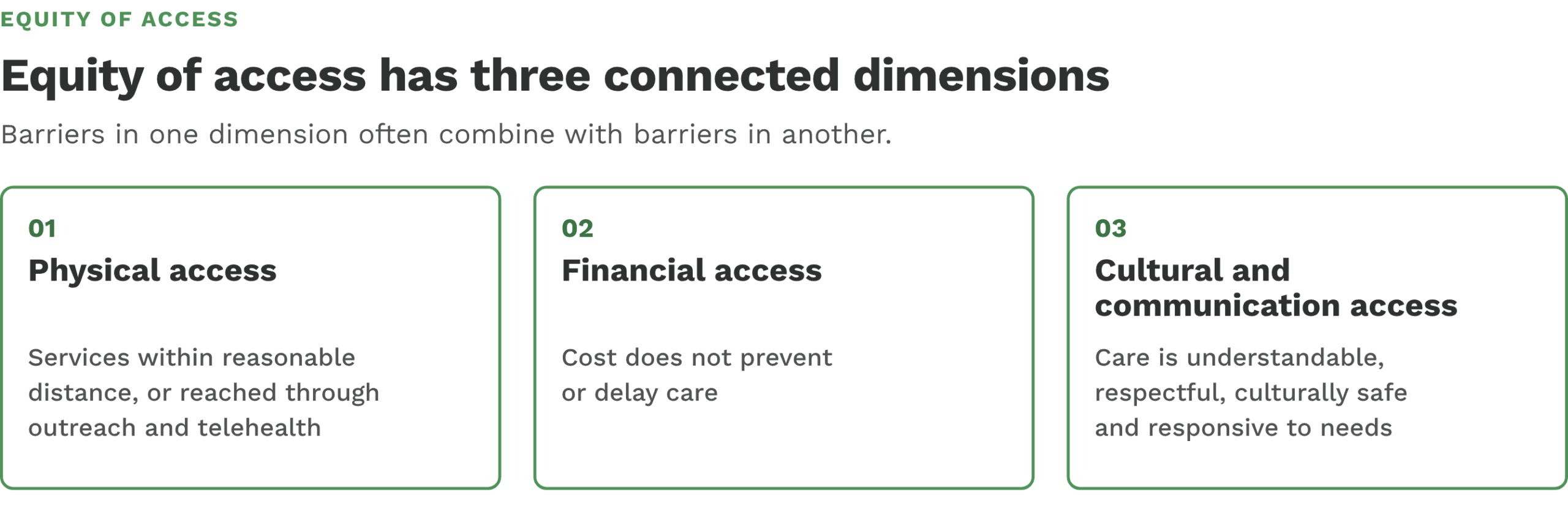
Example: A person in a remote area may face both distance and cost barriers. A person with disability may face both physical inaccessibility and communication barriers. A person from a culturally and linguistically diverse background may face both language barriers and low confidence in navigating the system.
2.2 Major barriers to equitable access
Australia’s healthcare system has strong universal foundations, but equity of access remains uneven. Several barriers continue to reduce effectiveness.
|
Geographical barriers |
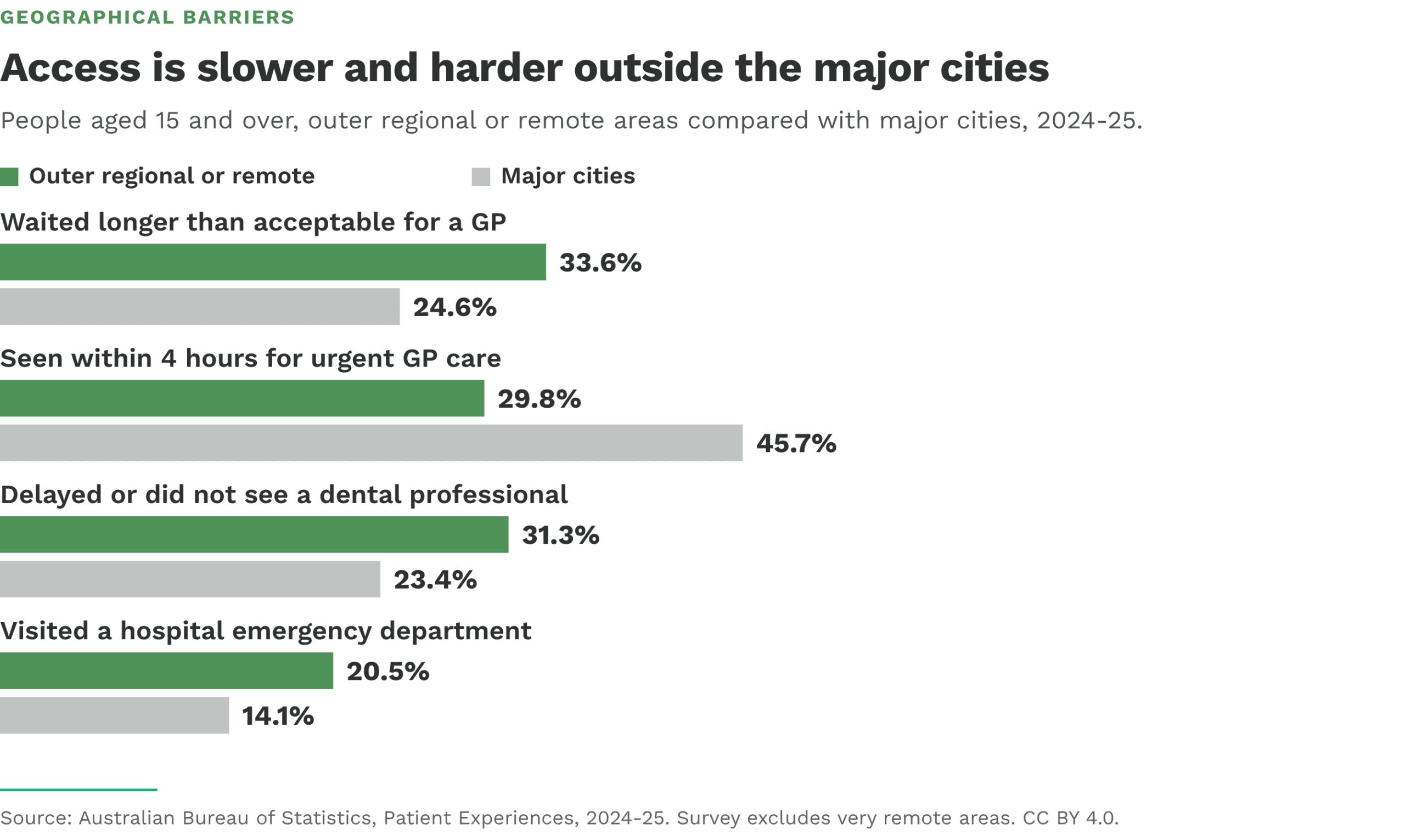
Australia’s size and population distribution mean that people in rural and remote areas often have reduced access to GPs, specialists, allied health, diagnostic services, and hospital care. Long travel distances, limited transport, workforce shortages, and fewer local services can delay treatment and reduce preventive care. When early care is harder to access, conditions are more likely to worsen before treatment occurs. This can contribute to higher rates of potentially preventable hospitalisations, where admission might have been avoided through timely primary care. |
|
Financial barriers |
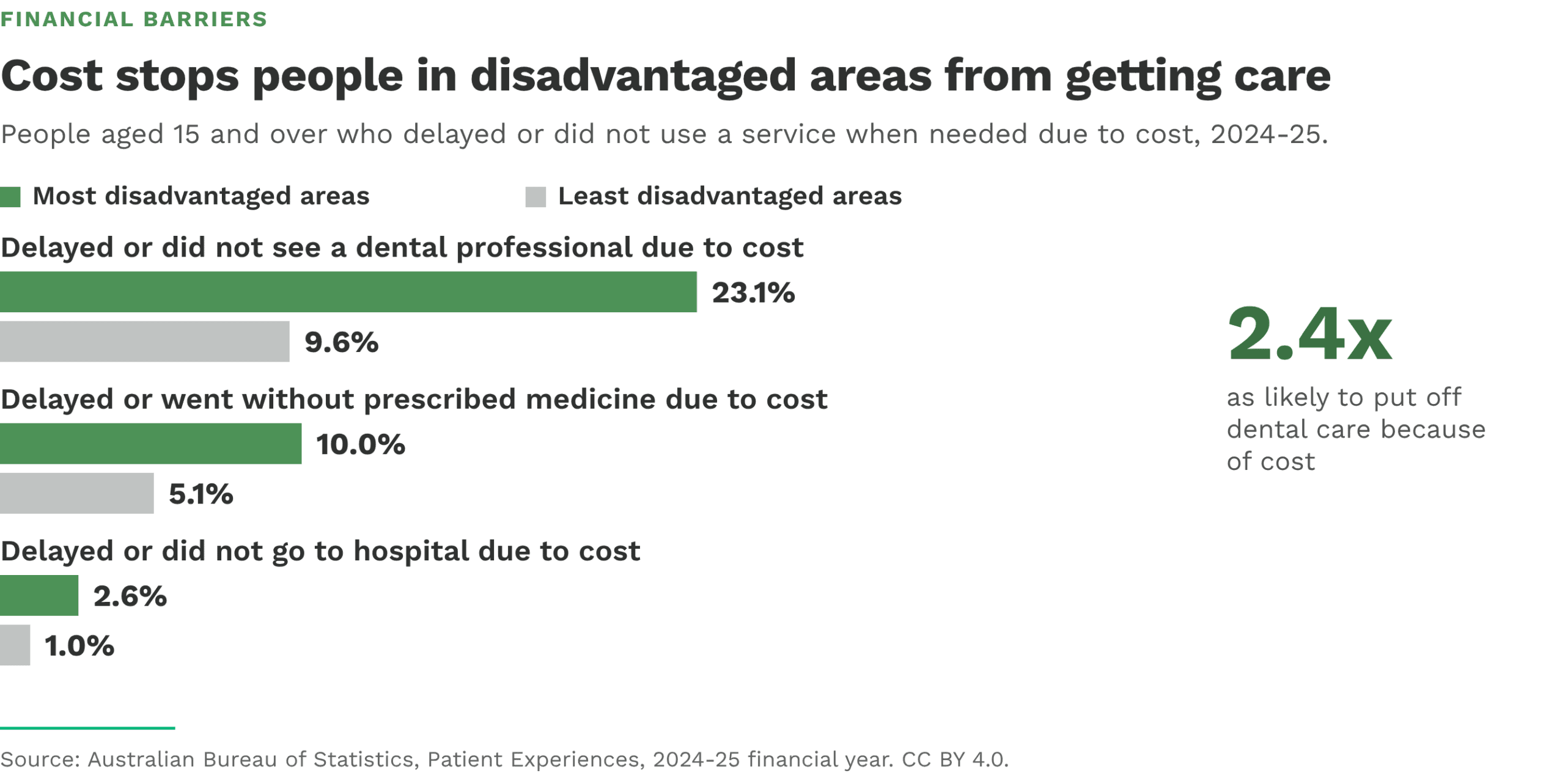
Although Medicare reduces costs for many services, it does not remove all financial barriers. Out-of-pocket costs remain significant for many people, especially in areas such as adult dental care, some specialist services, some allied health services, and gap payments linked to private care. Financial barriers can lead people to delay or avoid care altogether. This reduces effectiveness because problems that could have been addressed early often become more severe, more complex, and more expensive later. |
|
Cultural and linguistic barriers |
Access is not equitable if services are available but are not safe, respectful, or understandable. For Aboriginal and Torres Strait Islander Peoples, barriers may include racism, lack of cultural safety, and services that do not reflect Indigenous concepts of health and wellbeing. For culturally and linguistically diverse populations, barriers may include limited access to interpreters, unfamiliar health systems, and information that is difficult to understand. These barriers reduce trust, delay help-seeking, and weaken treatment adherence. As a result, the system may be available in theory but less accessible in practice. |
|
Disability-related barriers |
People with disability may face inaccessible buildings, unsuitable equipment, short appointments, poor communication support, or failure to provide reasonable adjustments. In some cases, health concerns may be dismissed or misinterpreted because of diagnostic overshadowing, where symptoms are incorrectly attributed to the disability itself rather than being properly investigated. This reduces both access and quality of care, which means the system is less effective for a group that may already have greater healthcare needs. |
|
Health literacy, navigation and waiting times |
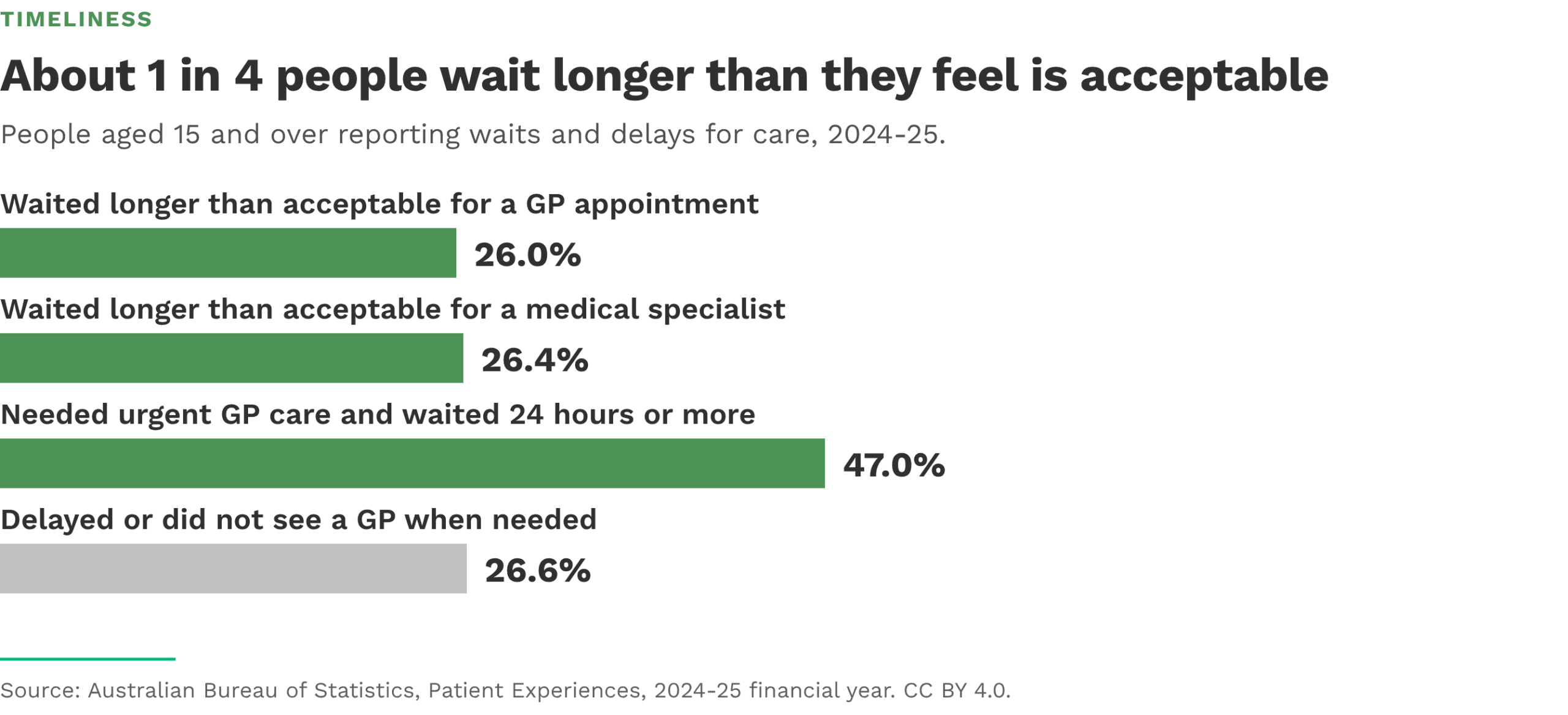
Healthcare systems can also be difficult to navigate. Referral pathways, eligibility rules, rebate systems, digital platforms, and waiting lists all require a degree of health literacy and confidence. People with lower health literacy may struggle to access the right service at the right time. Long waiting times also reduce equity, especially for specialist appointments, public dental care, elective surgery, and community mental health services. This can increase stress, worsen symptoms, and push people into emergency care instead of earlier, more appropriate treatment. |
2.3 Measures that improve equity
Australia has several important mechanisms that improve equity, even though they do not remove all barriers.
|
How it helps |
Main barrier or group addressed |
Limitation |
|
|---|---|---|---|
|
Medicare |
Reduces cost barriers and supports universal access |
Mainly addresses financial barriers across the whole population |
Does not cover all services equally |
|
PBS |
Improves medicine affordability |
Mainly addresses financial barriers, especially for people with ongoing medication needs |
Does not solve broader service access issues |
|
Telehealth |
Improves access for people who live far from services |
Mainly addresses geographical barriers for rural and remote populations |
Depends on digital access, local support and follow-up |
|
Royal Flying Doctor Service and outreach services |
Extends care into remote areas |
Mainly addresses geographical barriers for rural and remote populations |
Workforce and continuity can still be limited |
|
Aboriginal Community Controlled Health Organisations |
Provide culturally safe, community-led care |
Mainly addresses cultural barriers for Aboriginal and Torres Strait Islander Peoples |
Need sustained funding and expansion |
|
Interpreter services and translated resources |
Improve communication and understanding |
Mainly addresses cultural and linguistic barriers for culturally and linguistically diverse populations |
Not always consistently available |
|
NDIS-related supports |
Can assist some people with disability to access services |
Mainly addresses disability-related barriers for people with disability |
The NDIS is not itself a healthcare funding system |
Programs and frameworks such as Closing the Gap, community-controlled health services, and culturally tailored prevention initiatives such as Deadly Choices are important because they target inequities rather than assuming universal systems alone are enough. The detailed role of government and non-government organisations in providing or supporting these measures is explored more directly in 2.2.
Australia performs moderately well on equity because its universal structures provide a strong foundation. Medicare, the PBS, public hospitals, and targeted programmes clearly improve access for many Australians.
However, equity remains a major weakness in the system overall. The healthcare system is less effective when judged by equity because access remains uneven for rural and remote populations, Aboriginal and Torres Strait Islander Peoples, and many people with disability. As a result, Australia’s healthcare system is not ineffective, but it is not equally effective for all groups.
2.4 Indicators used to judge equity of access

Equity should be judged using more than one indicator. A system may appear effective overall, but still be inequitable for specific populations. These indicators do not affect all groups equally. They are especially important when assessing access and equity for groups who face greater barriers to care.
How equity can be judged or measured
Indicators that can be used to assess the equity of the healthcare system include:
- Service availability: whether people can physically reach essential services
- Utilisation patterns: whether high-need groups are actually using care
- Waiting times: whether care is timely
- Potentially preventable hospitalisations: whether primary care and early intervention are working
- Cost-related delay: whether affordability is protecting access in practice
- Outcome gaps: whether health benefits are shared equitably
- Patient experience: whether services are accessible, respectful and culturally safe
Using a range of indicators is important because equity is not only about whether a service exists. It is also about whether people can actually use it, whether they receive care early enough, and whether the outcomes of the system are shared fairly across the population.
3. Future opportunities for the healthcare system
Future opportunities matter because a healthcare system must respond to changing patterns of need, not only current demand. An effective future-focused system should improve equity, timeliness, quality, coordination, and sustainability.
The strongest opportunities are those that reduce longstanding barriers and improve access for groups who continue to experience poorer health outcomes or more difficulty accessing care. The syllabus support specifically highlights future opportunities in rural and remote locations, for Aboriginal and Torres Strait Islander Peoples, and for individuals with disability, so these are especially important areas for judgement.
|
Rural and remote locations |
One major future opportunity is to reduce the health gap between metropolitan and rural and remote communities. This includes expanding telehealth beyond simple video consultation, strengthening rural workforce pathways, improving workforce retention, and using more flexible service models where communities are small and spread out. These changes would improve effectiveness because they would make care more timely, reduce travel burden, and support better continuity of care. They would also help reduce preventable worsening of illness caused by delayed access. |
|
Aboriginal and Torres Strait Islander Peoples |
Future improvement for Aboriginal and Torres Strait Islander Peoples is most likely when healthcare reform strengthens self-determination, cultural safety, and community leadership. This includes expanding Aboriginal Community Controlled Health Organisations, increasing the Indigenous health workforce, strengthening co-design, reducing racism within mainstream services, and improving coordination between healthcare and broader social conditions that shape health. These opportunities matter because health outcomes are stronger when services are trusted, culturally safe, and shaped by the communities they are intended to support. |
|
Individuals with disability |
A further major opportunity is to improve healthcare access and outcomes for individuals with disability. Important reforms include building disability competence across the health workforce, improving communication supports and access to reasonable adjustments, making accessibility more consistent, strengthening care coordination, and improving preventive screening and early intervention. These reforms would make the system more effective by reducing avoidable harm, improving diagnostic accuracy, and ensuring that people with disability can access care on an equal basis. |
Overall, Australia’s healthcare system can be assessed as broadly effective, but not fully effective. Its major strengths include universal coverage, a wide range of services, and strong clinical capability. Its major weaknesses are inequitable access, fragmentation, and inconsistent timeliness, particularly for groups with greater barriers to care.
The most important future opportunities are therefore not simply about adding more services. They are about making the system more equitable, more connected, and more responsive to the needs of those who are currently least well served. If these opportunities are acted on effectively, the healthcare system will be better placed to achieve better health for all Australians.
Brief Summary
About the dot point and how to approach it
- Australia’s healthcare system is the network of services that prevents illness, treats disease, supports recovery, and improves population health, across health promotion, disease prevention, early detection, diagnosis and treatment, rehabilitation, and palliative care.
- Assess requires a reasoned judgement using criteria such as health outcomes, equity of access, quality and safety, and timeliness.
1. The role of the healthcare system
- Designed to protect, maintain, and improve population health, not only treat illness, across prevention through to palliative care.
- Delivered through primary, secondary, and tertiary care, and is more effective when referral pathways and information sharing support continuity of care.
- A hybrid healthcare system (public and private) supports universal access through Medicare and the PBS, but different patient status can affect cost, choice, and waiting time, reducing equity.
- Coordination and continuity of care (GP coordination, referrals, discharge planning, My Health Record, multidisciplinary care) improves outcomes and reduces duplication and delay.
- Overall, the system is broadly effective in its role, but reduced by fragmentation and inconsistent real-world access.
2. Equity of access to the healthcare system
- Equity of access means healthcare according to needs, across physical, financial, and cultural and communication access.
- Major barriers include geographical, financial, cultural and linguistic, disability-related barriers, and health literacy, navigation and waiting times.
- Measures such as Medicare, PBS, telehealth, outreach services, Aboriginal Community Controlled Health Organisations, interpreter services, and NDIS-related supports improve equity but have limitations.
- Equity should be judged using indicators such as service availability, utilisation, waiting times, potentially preventable hospitalisations, cost-related delay, outcome gaps, and patient experience.
- Australia performs moderately well, but equity remains uneven, reducing effectiveness for rural and remote populations, Aboriginal and Torres Strait Islander Peoples, and many people with disability.
3. Future opportunities for the healthcare system
- Future opportunities should improve equity, timeliness, quality, coordination, and sustainability, with priorities in rural and remote locations, Aboriginal and Torres Strait Islander Peoples, and individuals with disability.
- Overall, the most important opportunities focus on making the system more equitable, more connected, and more responsive to those least well served.